The plot
Catesby, Fawkes, and 36 barrels under the House
Guy Fawkes is the name everyone remembers. Official pages put Robert Catesby at the centre of the plot, and Fawkes in the cellar with the gunpowder.
English Heritage, telling “the real story of Bonfire Night,” is blunt: “the charismatic mastermind behind it all was Robert Catesby.” He was, that page says, “a devout Catholic, invested in converting England from Protestant to Catholicism,” and a participant in the failed 1601 Essex rebellion. UK Parliament’s people page uses the same word, “mastermind,” for Catesby. [source] [source]
The plotters, English Heritage says, “numbered an unlucky thirteen,” predominantly members of the gentry, but including Catesby’s servant, Thomas Bates, “who stumbled across the plot and took their number to a rather ominous thirteen.” They were angered by King James’s peace treaty with Catholic Spain. They “swore an oath on a prayer book and schemed to blow up the entire Houses of Parliament,” hoping that by killing King James I and his heir Prince Henry they could launch a pro-Catholic uprising, and then “indoctrinate James’ young daughter Elizabeth,” installing her on the throne with Catholic noblemen ruling on her behalf. [source]
English Heritage says that in March 1605 “an undercroft below the House of Lords became available.” The original 11th-century building “had undergone many alterations and extensions,” and “minimal security.” The plotters “found gunpowder easy to obtain due to the end of the war with Spain, so Guy Fawkes assumed the identity of ‘John Johnson’ and began to transfer the gunpowder.” Fawkes’s role “was to light the fuse, detonating the 36 barrels of gunpowder.” His knowledge of explosives “came from fighting for Spain against its Protestant enemies.” The Spanish war is also “where he adopted the Italianised version of his name, Guido. It was under this name that he signed his confession.” [source]
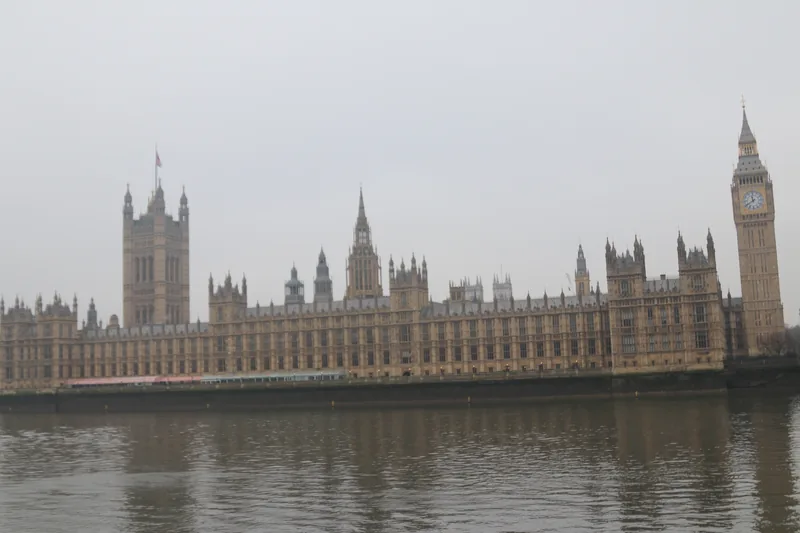
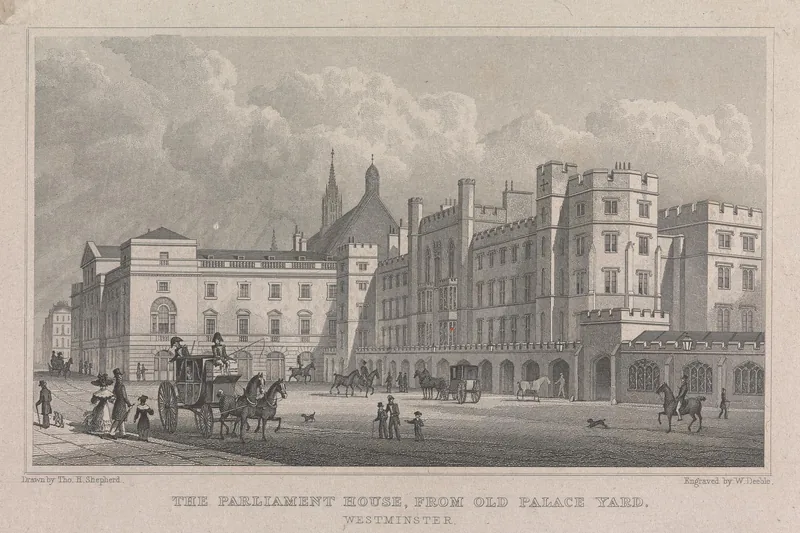
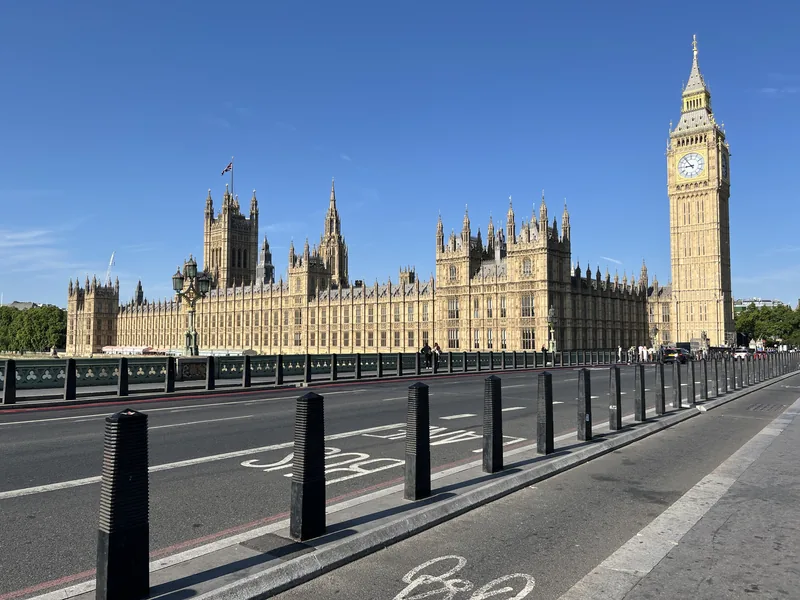
A print on this site, from 1829, shows the old Parliament House from Old Palace Yard. It is not the undercroft of 1605, and it is not the Victorian palace you see from Westminster Bridge today. The later photographs are captioned as later buildings, so a reader is not asked to treat a 2025 or 2026 view as a picture of the cellar. [source]
UK Parliament’s people page adds the official job description that popular memory often skips: Fawkes was “recruited as the gunpowder expert,” and “was caught red-handed in the basement storeroom under the House of Lords with the barrels of gunpowder on the 5 November 1605.” How that night is dated, exactly, is a story of its own, because another official page does not use quite the same hours. That story is told on the page about 4 and 5 November. [source]
The same people page is a roll-call of the rest of the company, in official character notes that are easy to skip if you only remember one name. Thomas Winter “was among the first to be drawn into the plot,” and “it was Thomas who tried to get the conspirators to abandon the plot when he realised that it had been discovered.” His brother Robert was recruited later. Thomas Percy “was a violent, wild character,” married to the Wrights’ sister Martha, “and came from a very wealthy, powerful family.” John and Christopher Wright “were viewed as dangerous Catholics by the authorities before they had even been drawn into the plot.” Francis Tresham is called “the most reluctant of the conspirators,” and the page says “it may have been Tresham who sent the Monteagle letter warning his brother-in-law not to attend Parliament.” The “may” is part of the official sentence, and it is kept. Robert Keyes “looked after the gunpowder” and John Grant “bought weapons for the conspirators.” Ambrose Rookwood and Sir Everard Digby “were both brought into the plot because of their money.” Thomas Bates, again, “was Catesby’s servant.” [source]
A few days before the fifth, English Heritage says, Lord Monteagle — “a Catholic sympathiser” — received a cryptic letter “citing ‘they shall receive a terrible blow’.” He took it, that page says, “to King James’ right-hand man, the Earl of Salisbury.” “Despite the King now knowing of a proposed plot, Robert Catesby decided to proceed in the belief that the letter was too vague.” “With heightened suspicions, the King ordered searches of Parliament.” What those searches found, and at which official hour, is told on the next page. [source]
Enjoyed Bonfire Night?
No pop-ups. No intrusive advertising. Just interesting stuff. A little support helps the next traditions site get built.