The fifth of November
From a Thanksgiving Act to fireworks in the sky
Bonfire Night is 5 November because official commemoration was written into law in 1606. The fire, the Guy, and the fireworks came after.
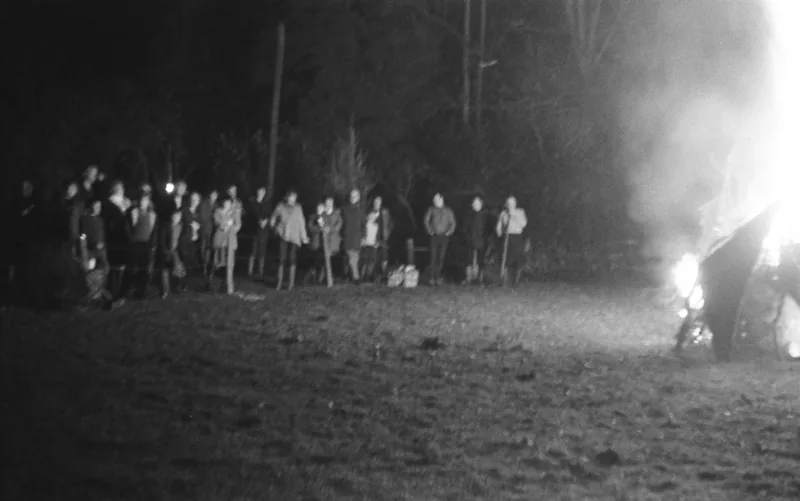
Open a drawer to look closer at a cellar in 1605, a letter that warned of a terrible blow, two official sequences for one night, and a Guy who was not always Guy Fawkes.
Thirty-six barrels under the House
English Heritage says Guy Fawkes’s role was to light the fuse, detonating 36 barrels of gunpowder. UK Parliament’s House of Commons Journal page records the same number: “36 barrels of gunpowder in the vault under the House.” In March 1605, English Heritage says, an undercroft below the House of Lords became available. Fawkes, that page says, assumed the identity of “John Johnson.” [source] [source]
The charismatic mastermind
English Heritage says “the charismatic mastermind behind it all was Robert Catesby.” UK Parliament’s people page asks you to “find out how Catesby became the charismatic mastermind of the Gunpowder Plot.” Guy Fawkes is the name remembered; Catesby is the organiser those official pages put at the centre. [source] [source]
The gunpowder expert
UK Parliament says Guy Fawkes was “recruited as the gunpowder expert,” and “was caught red-handed in the basement storeroom under the House of Lords with the barrels of gunpowder on the 5 November 1605.” English Heritage says his knowledge of explosives came from fighting for Spain, and that he signed his confession as Guido, the Italianised form of his name. [source] [source]
A terrible blow
English Heritage says that a few days before the 5th of November, Lord Monteagle — “a Catholic sympathiser” — received a cryptic letter, discouraging him from attending Parliament, and citing “they shall receive a terrible blow.” He took it to the King. UK Parliament’s people page says of Francis Tresham, “it may have been Tresham who sent the Monteagle letter.” That “may have been” is kept. This site does not treat the author as certain. [source] [source]
Two official sequences
UK Parliament’s Journal page says that on the evening of 4 November 1605, Sir Thomas Knyvett and Edward Doubleday “found Guy Fawkes and his gunpowder.” English Heritage says Fawkes “was discovered on the 4th of November with a suspicious amount of firewood,” and that “the gunpowder was found in the early hours of the 5th.” Both official sequences are told on this site. They are not forced into one story. [source] [source]
An annual service
UK Parliament says the Thanksgiving Act of 1606 “made services and sermons commemorating the Plot on the 5 November an annual event.” English Heritage says that in 1606 “it became mandatory for all English churches to host a service on the 5th of November.” The same Parliament aftermath page also points to the later Catholic Emancipation Act of 1829. [source] [source]
First the Pope, then Guy Fawkes
English Heritage says that in 1673 crowds began parading an effigy and stringing it up above a bonfire — “initially in the form of the Pope.” “It was during the 1800s that the figure burnt above a bonfire became the familiar Guy Fawkes of today.” “These days, Bonfire Night celebrations are stripped of their anti-Catholic sentiment.” [source]
UK Parliament’s aftermath page says the Plot “is commemorated to this day on Bonfire Night – 5 November.” The Thanksgiving Act of 1606 “made services and sermons commemorating the Plot on the 5 November an annual event.” English Heritage, in almost the same official year, says that in 1606 “it became mandatory for all English churches to host a service on the 5th of November.” Soon, that page says, other forms of celebration began: “bonfires, puppet shows and official artillery salutes.” [source] [source]
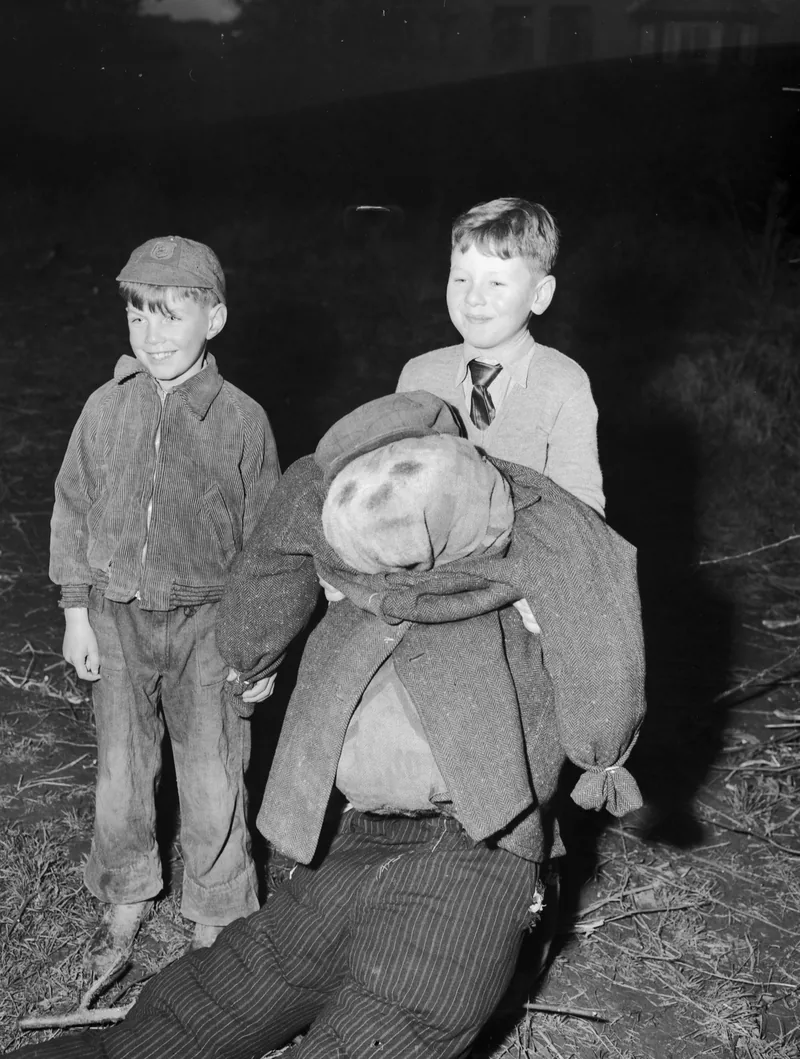
In 1673, English Heritage says, “crowds began the practice of parading around an effigy and stringing it up above a bonfire — initially in the form of the Pope.” “It was during the 1800s that the figure burnt above a bonfire became the familiar Guy Fawkes of today.” And then a later, careful sentence: “These days, Bonfire Night celebrations are stripped of their anti-Catholic sentiment. Guy Fawkes now seems to hold a more sympathetic anti-hero role in today’s popular culture, while the fireworks, bonfire and revelry take centre stage.” [source]


Before the commemorations began, there was the aftermath of the plot itself. Parliament’s aftermath page says: “Several of the conspirators were captured in the days following the discovery of the plot. Four were killed in a shoot-out and the remaining eight were convicted of treason and hung, drawn and quartered.” “The discovery of the plot had a lasting effect on the treatment of the Catholics in England.” Under a heading “Torture, trial and execution,” the same page says: “The King orders Guy Fawkes to be tortured until he confesses. The conspirators stand trial for treason and are found guilty and executed.” [source]
English Heritage, telling the same days in its own official wording, says: “With the names of the other plotters uncovered, investigators moved quickly to arrest them. Eight plotters made a final stand against 200 men at Holbeach House in Staffordshire; most were killed or wounded, while the few remaining survivors were hung, drawn and quartered.” That page also captions “the execution of Guy Fawkes” as 31 January 1606. The two official accounts are given here side by side, each with its source, and are not forced into a single head-count. [source]
The same Parliament aftermath page also points to a later legal change: the Catholic Emancipation Act of 1829, under a heading about “the growth of toleration.” The official story of the fifth of November is not only a cellar in 1605. It is also what the commemorations became, and what they later left behind. [source]
Enjoyed Bonfire Night?
No pop-ups. No intrusive advertising. Just interesting stuff. A little support helps the next traditions site get built.