4 and 5 November 1605
Two official sequences for one night
UK Parliament and English Heritage both describe the discovery of the plot. They do not use exactly the same hours, and this site does not force them into one story.
UK Parliament’s page on the House of Commons Journal is precise about the evening of the 4th. “On the evening of 4 November 1605 a royal official, Sir Thomas Knyvett, and Edward Doubleday found Guy Fawkes and his gunpowder.” “Realising on the morning of 5 November that the Plot had been discovered, most of the conspirators fled.” [source]
The same page then quotes the Journal itself. “The Journal records tell what happened when the House briefly assembled on the morning following the arrest of Guy Fawkes, in a marginal note by the Clerk of the time, Ralph Ewens.” The note, printed there, reads: “This last night the Upper House of Parliament was searched by Sir Tho. Knevett; and one Johnson, servant to Mr Thomas Percye, was there apprehended; who had placed 36 barrels of gunpowder in the vault under the House, with a purpose to blow King and the whole Company, when they should there assemble. Afterwards divers other gentlemen were discovered to be of the Plot.” The page titles the manuscript “Manuscript Journal of the House of Commons,” dates it 5 November 1605, and gives the catalogue number Parliamentary Archives, HC/CL/JO/1/5. The spelling “Knevett,” in the Clerk’s note, sits beside the same page’s modern “Knyvett.” Both are quoted as printed. [source]
English Heritage, on a different official page, gives a slightly different sequence. After the Monteagle letter, “with heightened suspicions, the King ordered searches of Parliament.” Then: “Guy Fawkes was discovered on the 4th of November with a suspicious amount of firewood. The gunpowder was found in the early hours of the 5th, prompting Fawkes’ arrest and subsequent torture.” “Days of gruelling torment resulted in a confession and an order for his execution.” A picture caption on that page dates “the execution of Guy Fawkes” to 31 January 1606. [source]
UK Parliament’s people page, in a third official wording, says Fawkes “was caught red-handed in the basement storeroom under the House of Lords with the barrels of gunpowder on the 5 November 1605.” That is not treated here as a correction of the Journal’s evening of the 4th, or of English Heritage’s firewood on the 4th and gunpowder in the early hours of the 5th. It is a third official sentence, attributed to its page. [source]
A few days before, English Heritage says, Lord Monteagle — “a Catholic sympathiser” — received a cryptic letter citing “they shall receive a terrible blow.” He took it “to King James’ right-hand man, the Earl of Salisbury.” “Despite the King now knowing of a proposed plot, Robert Catesby decided to proceed in the belief that the letter was too vague.” Parliament’s people page says “it may have been Tresham who sent the Monteagle letter.” The “may” stays in the sentence. [source] [source]
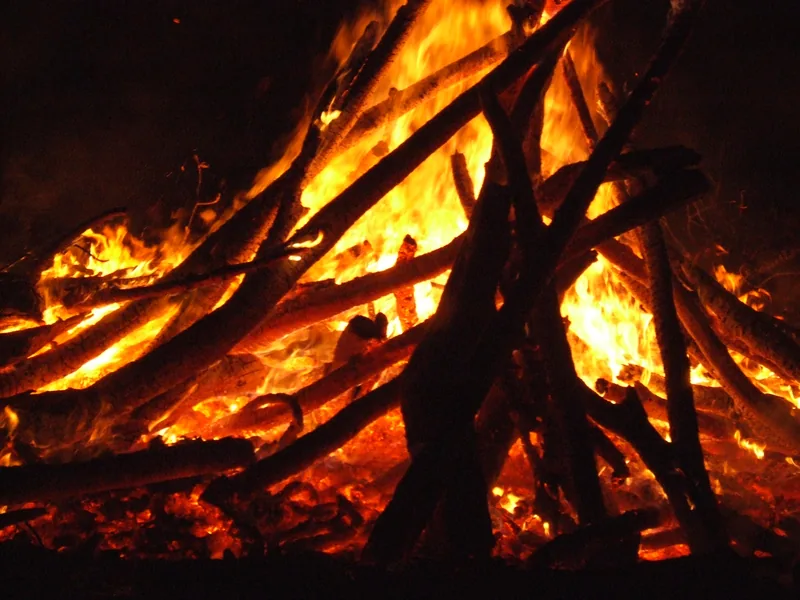
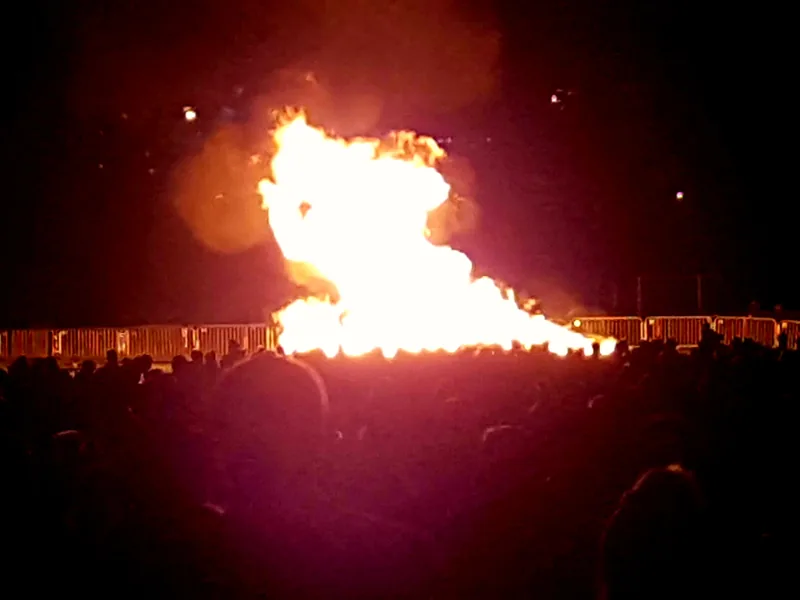
Photographs of later bonfires on this site are dated honestly. The Camberwell bonfire was photographed on 4 November 2007, and the Alexandra Palace bonfire on 4 November 2017. They are pictures of fires, not pictures of 1605, and not automatically pictures of the 5th. [source]
Keep exploring
Enjoyed Bonfire Night?
No pop-ups. No intrusive advertising. Just interesting stuff. A little support helps the next traditions site get built.